
Start with a public, indexable page
A locally hosted development site cannot be discovered by public search engines. On the public domain, check that intended articles return a successful response without login, that required assets can be fetched, and that neither page markup nor HTTP headers contain an accidental noindex directive.
Robots.txt controls crawling; noindex controls indexing when a crawler can read it. Blocking a URL in robots.txt is not a reliable way to remove it from search. Keep staging environments protected and make launch checks explicit.
Give every article one preferred URL
Use a stable permalink and link to it consistently from navigation, related articles, the sitemap and metadata. Redirect obsolete aliases to the appropriate destination instead of serving identical content at several paths. A canonical tag is a signal, not a command, and should agree with the page content and other signals.
Return an actual 404 or 410 for removed pages without an equivalent replacement. Do not return a successful response with a generic article merely because the URL ends in a familiar slug. Give paginated archives their own URLs and keep their links crawlable.
Organize content around reader tasks
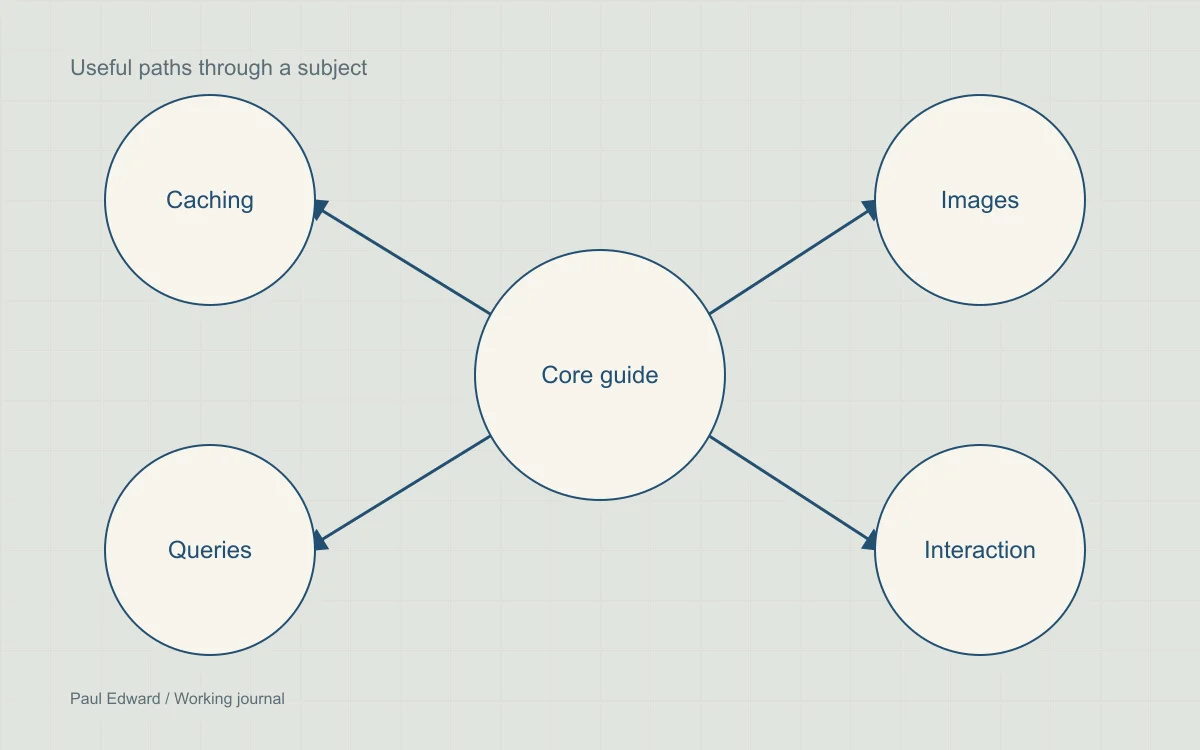
Create a guide that helps a reader choose a next step, then link to relevant detailed articles. For example, a WordPress speed checklist can link to server-response diagnosis and responsive images. Those articles can link back when the broader checklist is useful.
Use descriptive link text and ordinary HTML anchors. There is no mandatory word count, cluster size or number of links that makes a page authoritative. Avoid near-duplicate pages targeting slightly different versions of the same question.
Make search and sharing metadata accurate
- Write a distinct title that describes the article’s actual task or answer.
- Summarize the page in its meta description without unsupported promises. Search engines may choose another snippet.
- Use an appropriate social image, meaningful alternative text and correct image dimensions.
- Keep author identity and published/updated dates visible and consistent with saved content.
- Use Article or BlogPosting structured data for articles, alongside a matching breadcrumb trail. Do not add ratings, awards or claims that the page does not substantiate.
Keep discovery files focused
Include canonical, public, indexable articles in the XML sitemap. Exclude private material and deliberately noindexed posts. Sitemaps aid discovery; submitting one does not guarantee that every URL will be indexed.
A small editorial site rarely needs elaborate crawl-budget manipulation. Fix broken internal links, duplicated URL patterns and server errors before blocking useful categories. Search-result pages can be noindexed while article and category links remain accessible.
How does this help AI search?
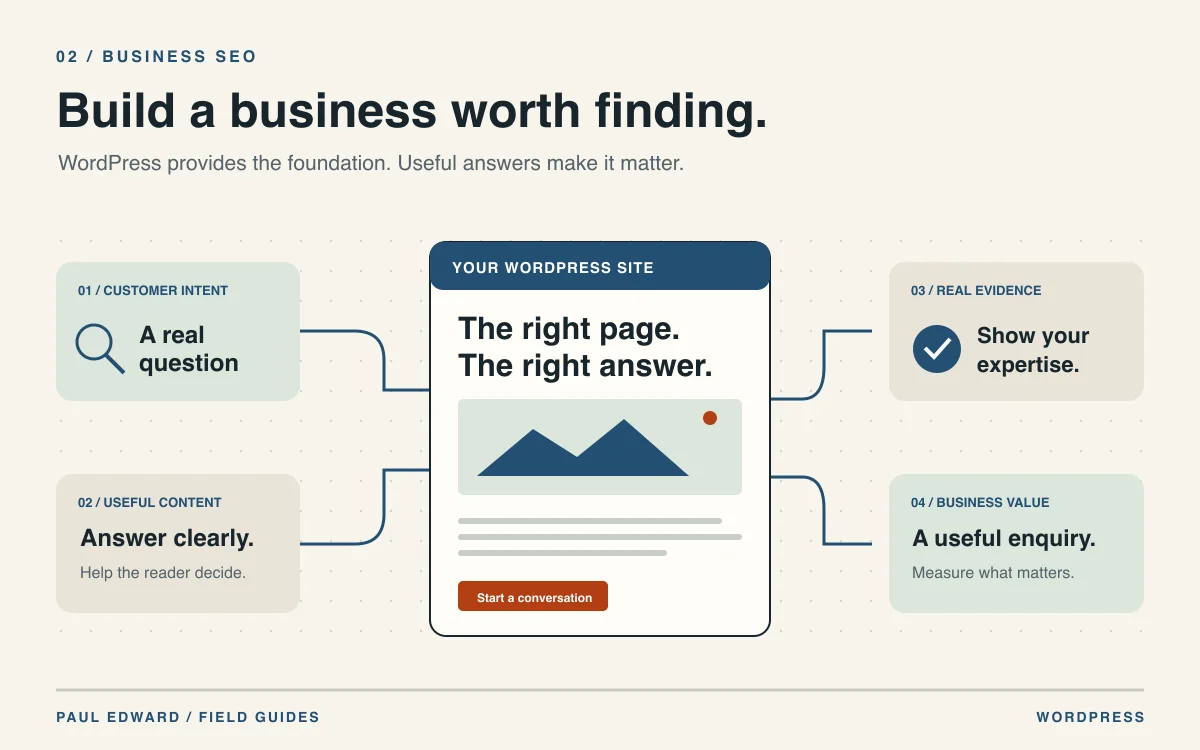
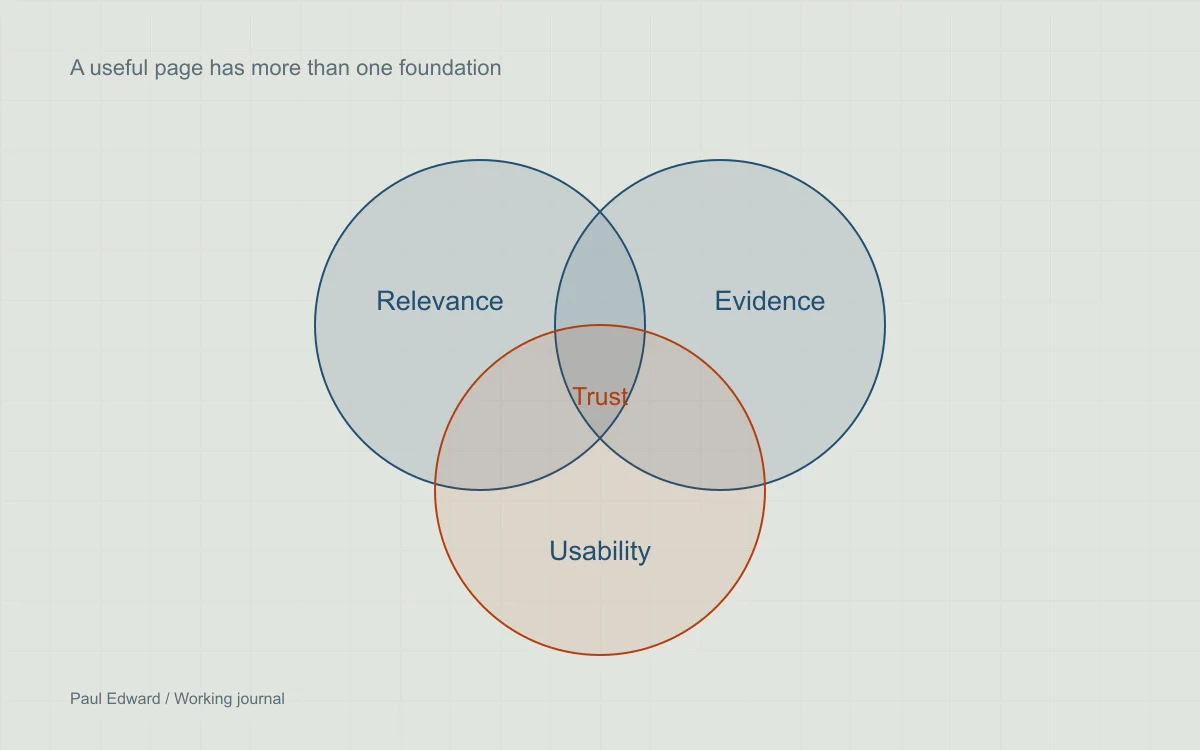
Clear answers, accessible HTML, supporting evidence and accurate attribution also help systems understand a page. Google’s AI search guidance does not require a special AI schema or an AI text file. A concise llms.txt may be a supplementary navigation aid, but it is not an indexing or citation guarantee.
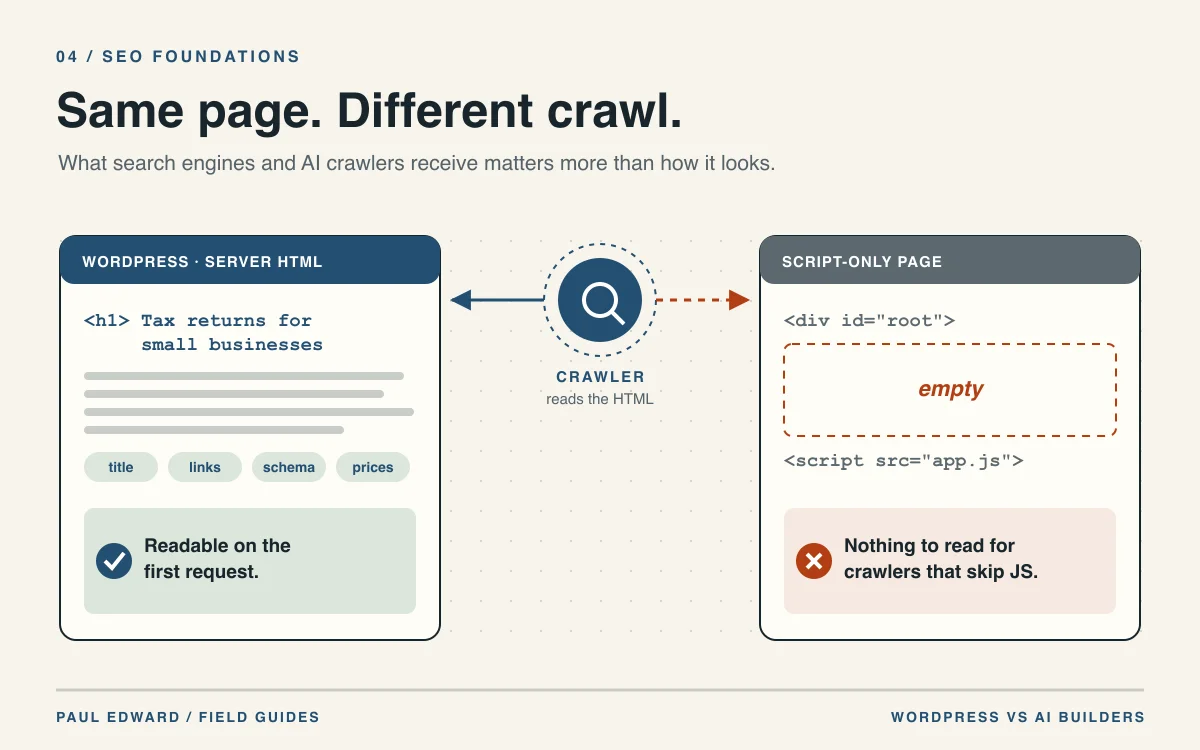
Check crawler access on the public host and any CDN or firewall. Avoid creating bot-only claims or stuffing repeated keywords into hidden content. A useful answer should be the same answer a reader sees.
Measure progress on the public domain
Verify the site in Search Console and Bing Webmaster Tools, submit the sitemap, and inspect representative URLs. Track indexing, relevant queries, impressions, clicks and useful enquiries over comparable periods. Separate branded and non-branded demand and annotate releases. A ranking movement by itself does not prove which change caused it.
Frequently asked questions
Can Google index a website that only runs on a .local domain?
No public crawler can reach a site that exists only on your local machine. Publish the site on a reachable domain, then verify HTTPS, response codes, crawl access, canonical URLs and indexing directives. Local testing confirms the implementation, not public indexing.
Does submitting a sitemap guarantee that every article is indexed?
No. A sitemap helps a search engine discover preferred URLs; it does not require the engine to index or rank them. Include successful, public, indexable URLs and inspect the submitted sitemap and representative pages in the provider’s webmaster tools.
Should I use robots.txt or noindex to keep a page out of results?
Robots.txt controls fetching; noindex asks for exclusion after a crawler can access that directive. A robots block can stop the crawler from seeing noindex. Use authentication for private content rather than treating either directive as an access-control mechanism.
Are special AI files or FAQ markup required for AI search?
Google says no special AI file or schema is required, and that it ignores llms.txt for Search. Concentrate on accessible, useful content and accurate technical output. Verify the public property’s current Search Console eligibility settings; no markup guarantees an AI citation. See the official AI optimization guide.
Sources and further reading
Keep exploring
Read what Google documents about rankings and the WordPress performance checklist.
Leave a Reply